Sunday, March 8, 2015

Nothing Really Mattress: Kafka, Camus, and Importance of Translations

Analyzing translations of the first sentence in Franz Kafka's novella Metamorphosis by looking at diction (connotation/denotation), syntax, imagery/details, structure, and other stylist/figurative elements:

Original: Als Gregor Samsa eines Morgens aus unruhigen Träumen erwachte, fand er sich in seinem Bett zu einem ungeheuren Ungeziefer verwandelt.

Translation #1: As Gregor Samsa awoke one morning from uneasy dreams he found himself transformed in his bed into a gigantic insect.
  • Diction: 'awoke', 'uneasy', and 'transformed' are uncommon conversational words, so they create a more formal tone; 'found himself' suggests surprise
  • Syntax: sentence is arranged in chronological order; seems to go from one event to the next; subject, verb, object
  • Imagery/Details: a man waking up; nightmares; bed; giant, creepy insect to replace the man in the bed
  • Structure: very orderly
  • Other: Antecedent: introduces Gregor Samsa then uses 'he', 'himself', and 'his' referring to Gregor
#2: Gregory Samsa woke from uneasy dreams one morning to find himself changed into a giant bug.
  • Diction: 'woke' and 'changed' are more casual words, so it creates a more casual tone
  • Syntax: chronological; subject, verb, object
  • Imagery/Details: a man waking up; nightmares; man surprised he changed into a giant bug; not many details
  • Structure: factual; straight to the point
  • Other: Anti-Climax: the event happens without anything leading up to it
#3:When Gregor Samsa awoke from troubled dreams one morning he found he had been transformed in his bed into an enormous bug.
  • Diction: 'awoke', 'troubled', and 'transformed': more formal tone
  • Syntax: chronological, subject, verb, object
  • Imagery/Details:a man waking up, frazzled from bad dreams the night before, man transforms in his bed to become a bug
  • Structure: a little odd; seems words were just thrown in in wrong places like 'in his bed' and 'one morning'
  • Other: Suspense: he has been transformed into an enormous bug...What's going to happen next?
#4: One morning, upon awakening from agitated dreams, Gregor Samsa found himself, in his bed, transformed into a monstrous vermin.
  • Diction: 'upon', 'awakening', 'agitated', 'vermin': more formal tone; 'monstrous' and 'vermin: negative, gross connotation
  • Syntax:  object, verb, noun
  • Imagery/Details: morning; sun; frustrated/angry/annoyed person waking up; the person is a man in his bed; man realizes he is actually a huge, ugly rat
  • Structure: many pauses with commas; thrown in information
  • Other: Epiphany: 'Gregor Samsa found himself...transformed into a monstrous vermin'; Gregor makes the realization that he is now a vermin
Literary devices play a huge role in the meaning of a text. Authors use everything from word choice to syntax to punctuation to imagery shift in order to get their point across. Looking at word choice, we can see how much of a difference this device made in Translation #4 by replacing the word 'bug' or 'insect' with 'vermin'. Immediately, the first image that popped into my head was of a large, disgusting, evil-looking rat instead of a huge, perhaps harmless 'bug'. Even between the words 'bug' and 'insect', I pictured something different. When I think of an 'insect', I think of a hairy, brown, antenna-y, leggy creepy crawly. Word choice in this example, especially, was an important part of the author's message. Syntax is the way the words are arranged in the sentence. This literary device makes a difference in the understanding of the text. The order in which an author talks about events affects which order the images appear in my head. The use of punctuation in texts can alter the whole meaning of the story. For example, commas and ellipsis can cause the audience to add dramatic pauses to the text while question marks obviously can cause the audience to wonder. Imagery shifts can be used to create chaos or confusion in a text. If the author wants the reader to feel overwhelmed by the story, imagery shifts would be a good way to cause this feeling. 

I really don't believe that there is one literary device out of these four that is the most important. I think each one contributes to the meaning of the story differently and allows the audience to understand it. When a few of these devices are paired together in a sentence or throughout a text, the effect is especially prevalent. This exercise definitely brings up the difficulty of reading translated texts. Since everyone has varied opinions, one person's perception of the text could not necessarily be what the author intended it to be. This would then affect the reader of a translated text and construe what they think the text means. 

Sunday, January 25, 2015

Once Upon a Time...

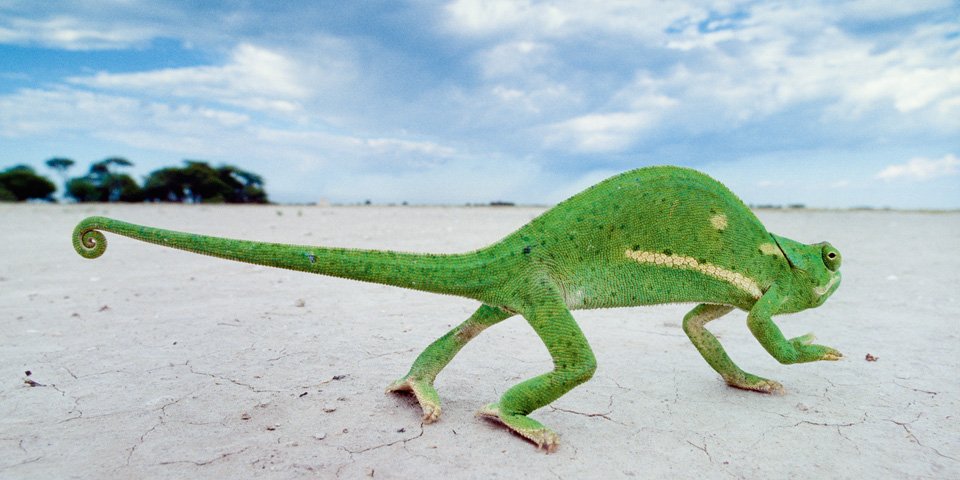
http://www.taschen.com/media/images/960/teaser_teaser_lanting_okavango_1211271641_id_548350.jpg

Rhetorical Analysis of the TED Talk, "Frans Lanting: The story of life in photographs":

In this TED Talk, the speaker, Frans Lanting is trying to share, with his audience, a summary of the story of life through pictures. I believe his goal is not to persuade the audience of anything, but rather just help them to visualize the story of how life came to be. Frans, a National Geographic photographer starts off his Talk by telling the audience a little bit about why he decided to take on this "personal [photography] journey" five years ago. Although he shares that it was the hardest thing he has ever attempted and he felt like backing out several times, he had some revelations as well. Frans went down to a remote lagoon in Australia, the only place in which stromatolites -- "the first living things to capture photosynthesis" -- still occur today, in hopes of seeing the world as it was three billion years ago. He shares that "going down there was like entering a time capsule" and he "came out with a different sense of" himself in time. Frans then goes into the story of life, beginning with how, in space, matter was condensed into spheres, which eventually created Earth, then how oceans were created. Mud and minerals became substrate and bacteria led to living structures, such as stromatolites, which were first to exhale oxygen and change the atmosphere forever. Membranes formed from meteorites and eventually more complex forms, that could see and move began to emerge. From there, species began to appear and develop from marine life to amphibians to birds and plants. Frans describes how the event of an asteroid, which demolished many types of creatures, led to the creation of a new world filled with mammals, including humans. He introduces the connection of humans to nature with our blood veins mimicking courses of rivers around the world and our brains replicating a drainage of a tidal marsh. Frans ends his Talk by saying that "Earth is alive" and we can imagine and shape where we go next in our journey.

The speaker, Frans Lanting gets his point of informing the audience of how life came into existence across by showing his pictures on the screen while sharing the story of life. He utilizes Pathos the most during this TED Talk, but examples of Ethos and Logos are also apparent.
Pathos: Frans is trying to play on the audience's emotions by saying how difficult this project was for him to do. By telling the audience that he wants to share one of his revelations with them, they feel as though they are fortunate and one of the few people that he is sharing his experience with. He also displays his photographs on a screen, which helps the audience understand what he is trying to explain to them.
Ethos: In the beginning, Frans mentions that he is National Geographic nature photographer and by doing this, his intention is to prove his authority. However, besides this title, he doesn't really give any more information on how he knows the story of life. I think it seems more credible to the audience because of his use of his pictures. In my opinion, the audience definitely should look up the story of life from a more credible source to make sure Fran's story is valid.
Logos: Frans backed up his Talk with his personal information in the beginning and the pictures that he took. He mentions where he went to take the pictures and what his reasoning behind his journey was. He used scientific words that helped the audience believe in the story he was telling (whether all of the facts were right or not). The structure that Frans used in his presentation was very smart because it was in chronological order and was easy for the audience to understand.

I picked this TED Talk because I have always been interested in photography and I am amazed that a whole story (and multiple interpretations of a story) can be told by just looking at a picture. In this case, when a lot of photographs were paired together to create a series that was then paired with a powerful story, the feeling I received from it was complete awe-struck. The story and the photographs both benefited from being presented together. I think this Talk could relate to this next unit we are going into about new discoveries and why and how certain things have come about, like the cloning in the book, Never Let Me Go. By Frans mentioning at the end that it is basically up to us where we go from here, it also relates to The Strange Case of Dr. Jekyll & Mr. Hyde with the newly improving and expanding scientific field.

Sunday, January 11, 2015

Blog Post #8, Baby

Question 1: In film noir, many of the male leads are weak, frustrated men. While you are watching Double Indemnity, make a mental note of Walter Neff’s characteristics. What kind of man is he? What is his relationship like with women?


In the movie Double Indemnity, Walter Neff is an insurance salesman who is convinced by Phyllis Dietrichson to help her kill her husband in order to gain his insurance money. In the beginning of the film, when Walter first comes to the Dietrichson's home, he seems like a determined salesman just trying to do his job...until he sees Phyllis. As soon as he sees Phyllis, his focus seems to switch to trying to impress her. He remains as confident as he was before, but already appears to be under Phyllis' "spell". At his office, Walter also seems confident and sure of who he is, especially when he is talking to his boss, Keyes. Walter will often joke with Keyes and try to push his buttons. At one point, Walter is nagging on Keyes so much that Keyes threatens to throw his desk at him. The next time Walter meets Phyllis at the Dietrichson's home, he seems willing to do just about anything for her. When Walter picks up on Phyllis' plan, he becomes frustrated that she is only trying to use him and he leaves. Later, when she comes over to his apartment, he acts stubborn and like he is not going to tolerate her using him at first. Then, he gives in to her and agrees to help her with her plan to murder Mr. Dietrichson. Throughout the rest of the film, Walter's confidence seems to dwindle and he becomes more reliant on Phyllis, who appears to be the dominant of the two. Later in the film when he starts hanging out with Lola (even the very first time when she just appears in his car and he agrees to take her to meet her boyfriend), I noticed how it seemed like he would do anything for her as well. Overall, I think Walter Neff is a confident, intelligent man, but under the influence of women, can become easily persuaded into doing anything for them, even if it could be harmful to him. 

Sunday, November 23, 2014

Witch-slapped: Macbeth's fall from grace

Question 1: Why do people who are not "evil" take the first step into evil? What, for instance, is involved in taking that first step "down the primrose path to the everlasting bonfire" (Macbeth, 2.3)? What are the consequences of the individual choosing evil (particularly the internal consequences)?


http://timeimage.wikispaces.com/file/view/Still_-_Macbeth_(46).jpg/229915608/443x302/Still_-_Macbeth_(46).jpg

In my opinion, I believe people who are not "evil" take the first step into evil because they are either pressured into it or curious about what the other side entails. The first step into evil could be anything from stealing to lying to cheating to murder. In Macbeth, we can see that Macbeth's first act of "evil" is his decision to murder King Duncan. It is no doubt that Macbeth was pressured by Lady Macbeth to kill Duncan, but could there be another reason behind his decision? In the beginning of the play, Macbeth meets the Weird Sisters (three witches) and they tell him his prophecy of becoming king. The second witch says, "All hail, Macbeth! Hail to thee, thane of Cawdor!", then the third witch says, "All hail, Macbeth, thou shalt be king hereafter!" (Macbeth, 1.3). Macbeth continues to think about this prophecy and becomes determined to make his prophecy come true. This leads him to do pretty much anything that will give him more power, including murdering anyone who stands in his way of the throne

The consequences of any individual choosing evil include getting sucked in to evil ways, getting caught and punished for his/her actions, and if he/she is actually a good person, feeling guilt or remorse all the time. So far in the play Macbeth, we have seen Macbeth feel guilt, yet continue to act evilly. Right after killing Duncan, Macbeth is talking to his wife and says, "I'll go no more: I am afraid to think what I have done; Look on 't again I dare not" (Macbeth, 2.2). He knows what he just did was wrong, but tries to ignore it because he doesn't want to face it or deal with any repercussions it might have. 

I think Macbeth is a good example of why choosing evil can be so bad. At the time, it may seem like nothing too horrible could come out of murdering one of your good friends to become king, but in reality, it can lead to a lot of other problems. This one evil action of Macbeth's created sort of a snowball effect, and Macbeth couldn't help but continue to do evil things. Although Macbeth got what he wanted (to become king), I think the consequences weren't worth all the trouble he went through. 

Sunday, November 9, 2014

Searchin' in Santiago Sierra

Santiago Sierra
(b. 1966, Spain)
89 Huicholes
2006
84 black and white photographs

Panorama of the art

My sketch of the art

I chose to do my art analysis on Santiago Sierra's compilation of 84 black and white photographs called 89 Huicholes. This piece features photographs taken of people from the Huichol tribe in Mexico. 89 Huicholes almost takes up a whole wall at CAM Raleigh with four rows of 17 pictures each and one row of 16 pictures. The photographs were all taken in Mexico in 2006, but the artist lives in Spain.

In these photographs, it is important to notice that the people's faces are not showing and the only visible portion of the people are the backs of their heads. While I was at CAM Raleigh, the museum's tour guide told my group that the Huichol tribe believes if a picture of their faces is taken, it will take away a part of their souls. I believe that the artist's decision to photograph this particular group of people, who only believed in showing their backs to the camera, was intentional. By hiding a person's face or just a part of their face, it seems to intrigue viewers with a sense of mystery and curiosity.

89 Huicholes is a part of the exhibit called Limited Visibility and I think this piece fits with that theme because the viewer is unable to see the full person in the photograph. For me, these photographs are trying to convey that there is so much more to a person that just what you can see. Because you are unable to see the people's faces, you are almost forced to create faces for them using your imagination. When I look at this piece, my mind tends to wander and think about the story behind the person in each of the photos. 

The artist organized these photographs kind of randomly with no evident pattern. If the artist, Sierra, had sorted out the photographs, it would have taken away from the sense of freedom that is evoked from this piece. I think Sierra's decision to use photography was smart because I believe photography is as real as you can get to seeing the thing in person. If he had painted the people, the effect would have been different by making the barrier between the what the artist has experienced and what the viewer is seeing more noticeable. Another element to discuss about this artwork is that the photographs are in black and white. Sometimes, I think that black and white pictures have a greater impact than pictures in color because the colors can distract the viewers and take away from the details of the picture.